Prepared for Valerie Camillo · WTA · September 2026
“Even if she loses, she gets right back up.”
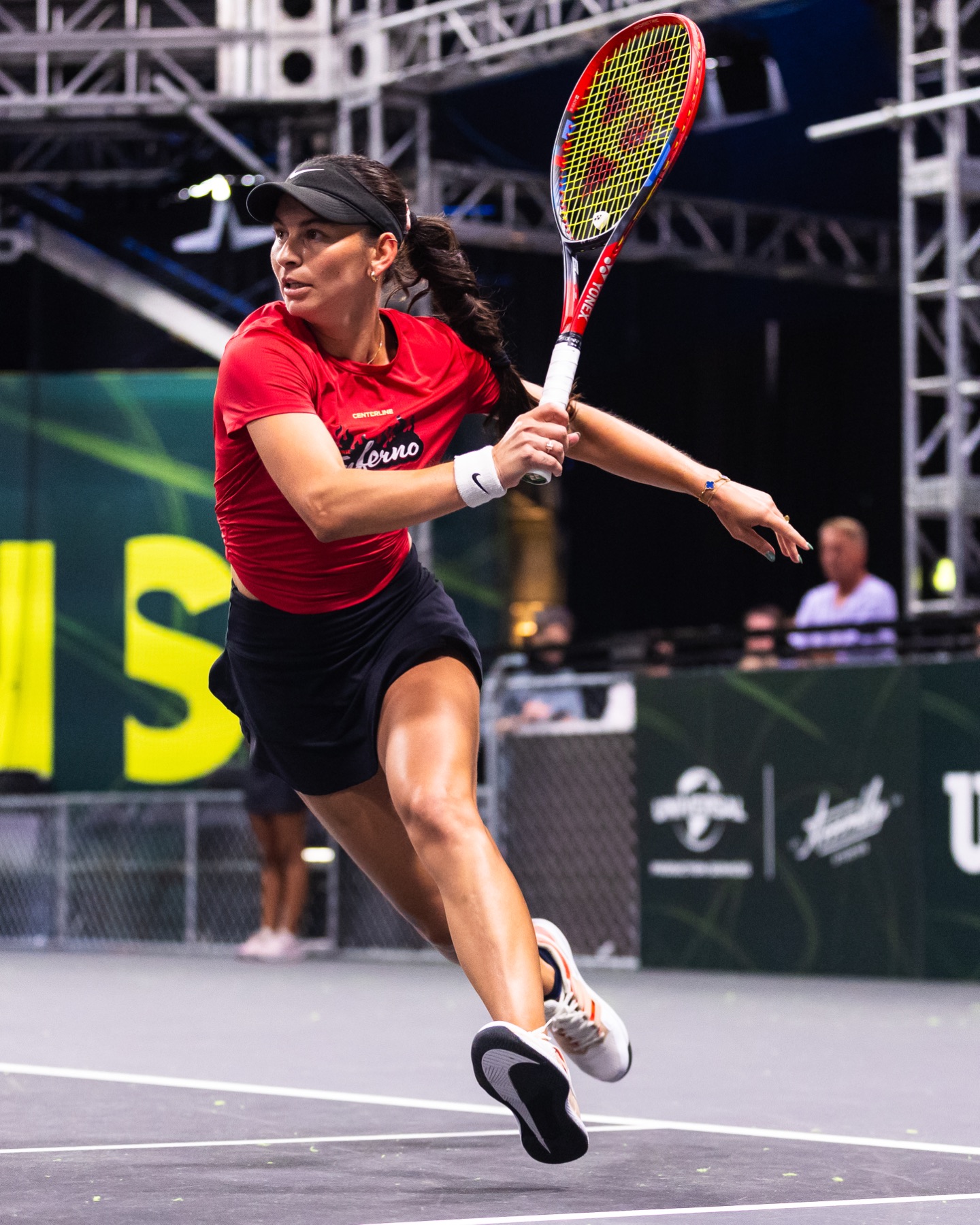
A kid in the stands in Atlanta, asked what she is most proud of about her sister — who is out on the court. Her family watches at home together. She came to watch her sister play.
INTENNSE Arena, Atlanta · 2026 season
■ Where the sport loses her
Five thousand graduate. Twenty are absorbed.
Dave Fish’s number, and it is the one that explains the shape of women’s tennis below the headlines: of roughly 5,000 collegiate tennis players who graduate each year, the existing professional infrastructure takes about twenty.
Scarcity at the very top is normal across collegiate sport. What is not normal is what sits underneath it. The individual tour is unsustainable below roughly the top 200, and tennis has never had a professional team destination, so the choice facing almost every graduating player has been to chase the individual tour or stop competing altogether.
For women that choice arrives earlier and costs more. A player who cannot fund two years of travel on speculative prize money does not drop to a lower professional tier, because there isn’t one. She leaves the sport at twenty-two — and the tour never finds out what she would have been at twenty-six.
■ The layer that is missing
Not the top of the game. The rung beneath it.
This brief does not argue that the top of women’s tennis is broken. It plainly isn’t — the depth at the front of the draw has rarely been better, and the American cohort inside the top 100 is among the strongest in the sport.
The argument is narrower and, we think, harder to dismiss: a tour is only ever as deep as the layer feeding it, and in tennis that layer does not exist. Every other major team sport has one. Tennis asks a twenty-two-year-old to go straight from a college roster to an individual circuit that cannot pay her, and treats whatever happens next as her own affair.
That third number is the one we would put in front of you. One hundred and forty-four women applied for a professional place in a two-month season in its second year, in one city. They were not waiting for an invitation to the tour. They were looking for somewhere to keep playing for money.
■ Why the format does this on its own
Equal places aren’t a policy here. They are the format.
Every INTENNSE team fields three men and three women, in the same match, on the same court, in front of the same broadcast. The women’s results decide the tie exactly as much as the men’s.
That has a consequence the league cannot opt out of: every team that exists creates as many paid professional places for women as for men. Expansion is not a diversity commitment we might under-deliver against in a hard year. It is arithmetic. Ten teams, thirty women on court, and the same again the moment a city is added.
We know how hard parity is at tour scale. Your own targets are 2027 for combined events and 2033 for single-week 1000s and 500s, and those dates are realistic ones set against real economics. A new tier starting from nothing can simply begin there, which is not a virtue — it is an accident of being small and late. But it makes the tier useful to you rather than competitive with you.

■ The way in, for players with no other way in
She earned the court. She didn’t wait to be picked.
The Challenge Series is an open draw. The winners are drafted into a Challenge Team, coached by a guest professional, and earn an exhibition against a professional roster.
Vicky Flores came through it and finished the season as a professional with Team Tampa.
That is the whole mechanism in one sentence, and it is why this matters to a tour rather than only to a league. A player with no ranking, no agent and no route in walked into an open draw and left as a paid professional. The college pathway is not the only way through, and for players who bypass it altogether there is currently nothing else like it.
Alongside it sits the ballkeeper pathway. Ball keepers here aren’t staff — the single-ball rule and the serve clock make them part of the competition, part of a team — which turns a first afternoon on a professional court into a whole family’s way into the sport.

Junior
Entry programs, camps and local leagues in the team format.
School
High-school and collegiate competition on the same rules.
Club
Youth and adult recreational leagues at partner facilities.
Professional
A salaried team place — and, for some, the tour after it.
■ What it costs the tour
Nothing. That is the point.
You inherited a set of terms you have been candid about not accepting, walked away from a commercial merger rather than sign them, and are running the tour through a period of genuine budget discipline. This brief is not a request for money, a sanction, a calendar slot, or a rights concession.
INTENNSE runs an eight-week season in a summer window, salaries its players, and provides coaching. Players who spend that season with us are not lost to the tour — they are paid, coached, match-fit and still ranked. The places we create are additive supply into the game you govern.
One detail we noticed and read as deliberate: as the ATP cut its doubles programme, the WTA kept its own. A format built on multi-discipline team play — where singles and doubles count equally toward one score — is more aligned with that decision than with the one the other tour made.
Salaried, with league-provided coaching, over an eight-week season.
Up 748% year over year. 144 of them women.
Record live concurrents across the final series.
Two broadcast, two RSNs, seven FAST, three streaming — 60% of watch time on TV.
■ The premise
The same courts. A different product.
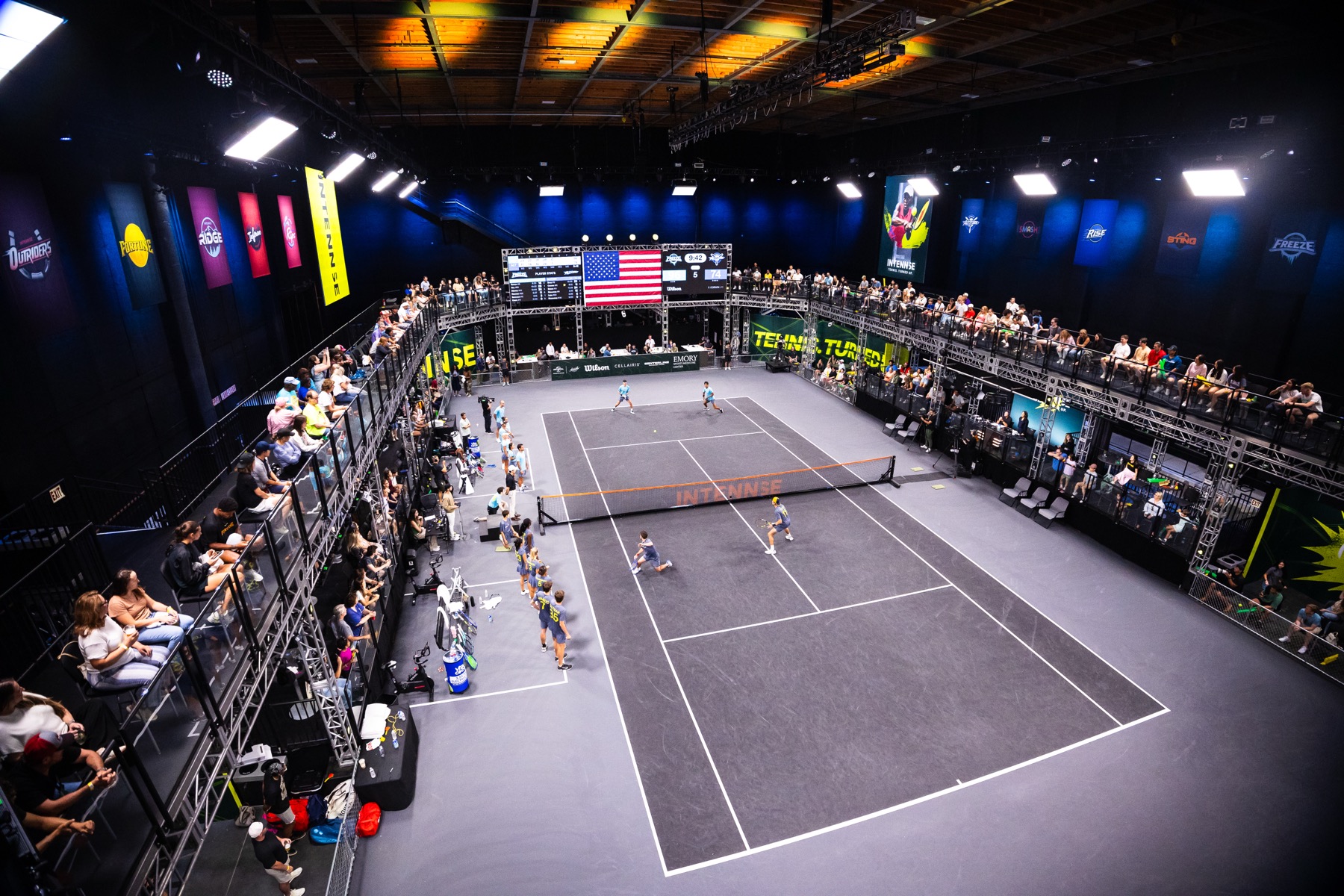
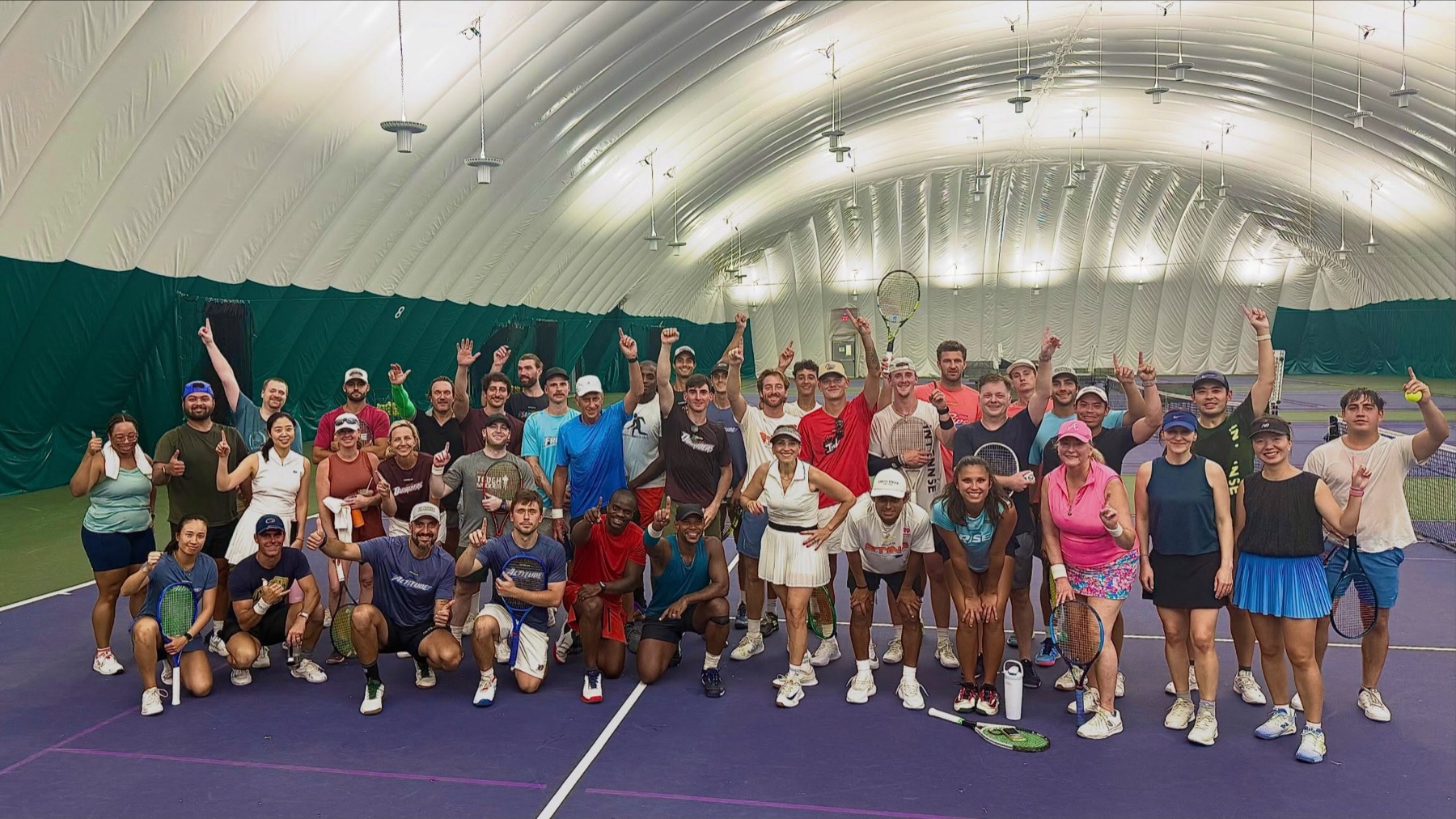
INTENNSE doesn’t need new infrastructure. It runs on the installed base the sport already has — the courts, the racquets, the clubs, the coaches, the volunteers.
What’s new is the layer on top: city teams, co-ed rosters, time-boxed matches that start and finish when we say they will, and an event built for the room as much as the broadcast.
And none of it is tied to the building. The arena is where we broadcast from — it isn’t what the format requires. A format that only works in a purpose-built studio could never be a pathway for anyone.
■ Ten teams, ten cities










A season that already runs.
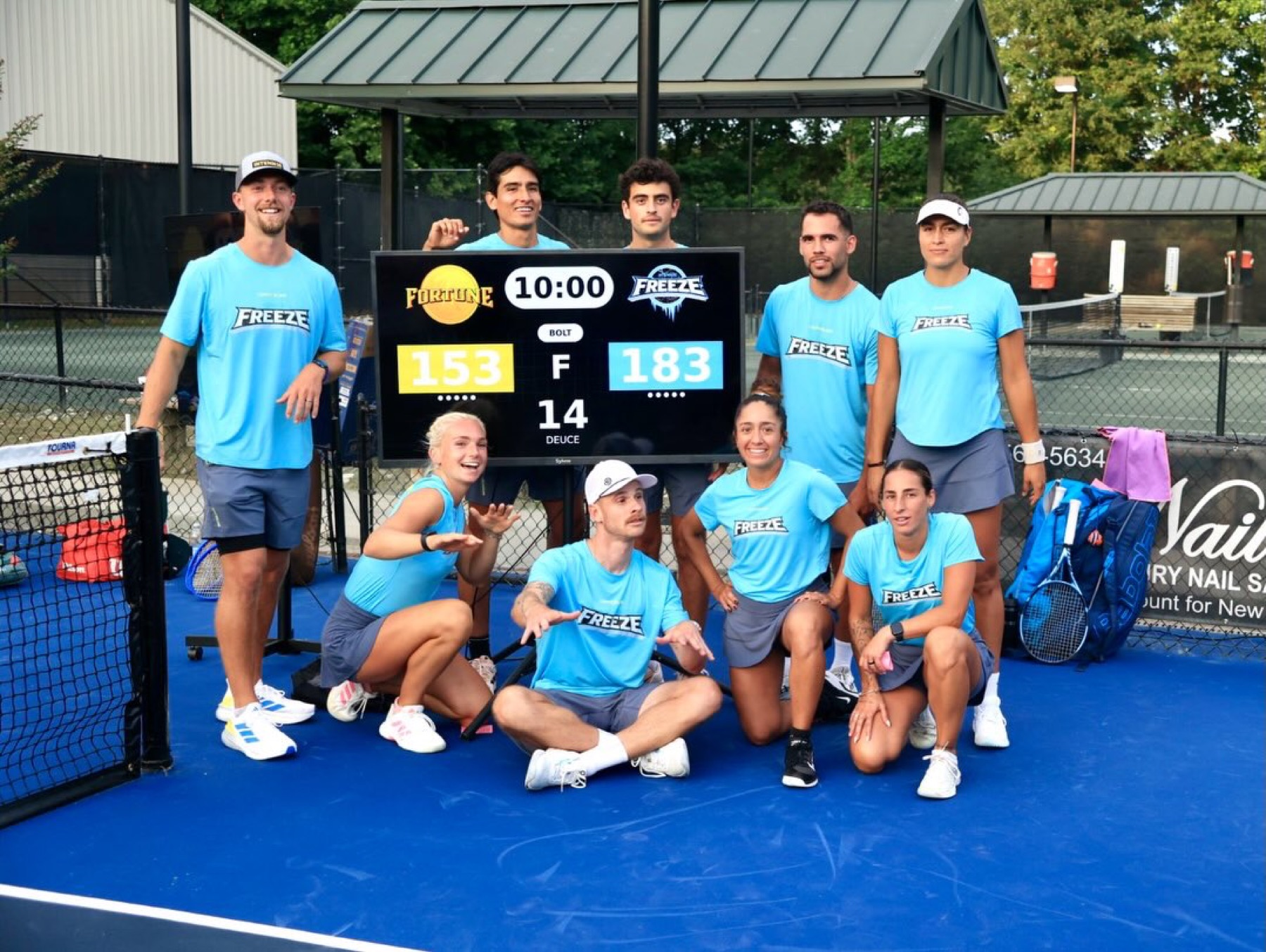
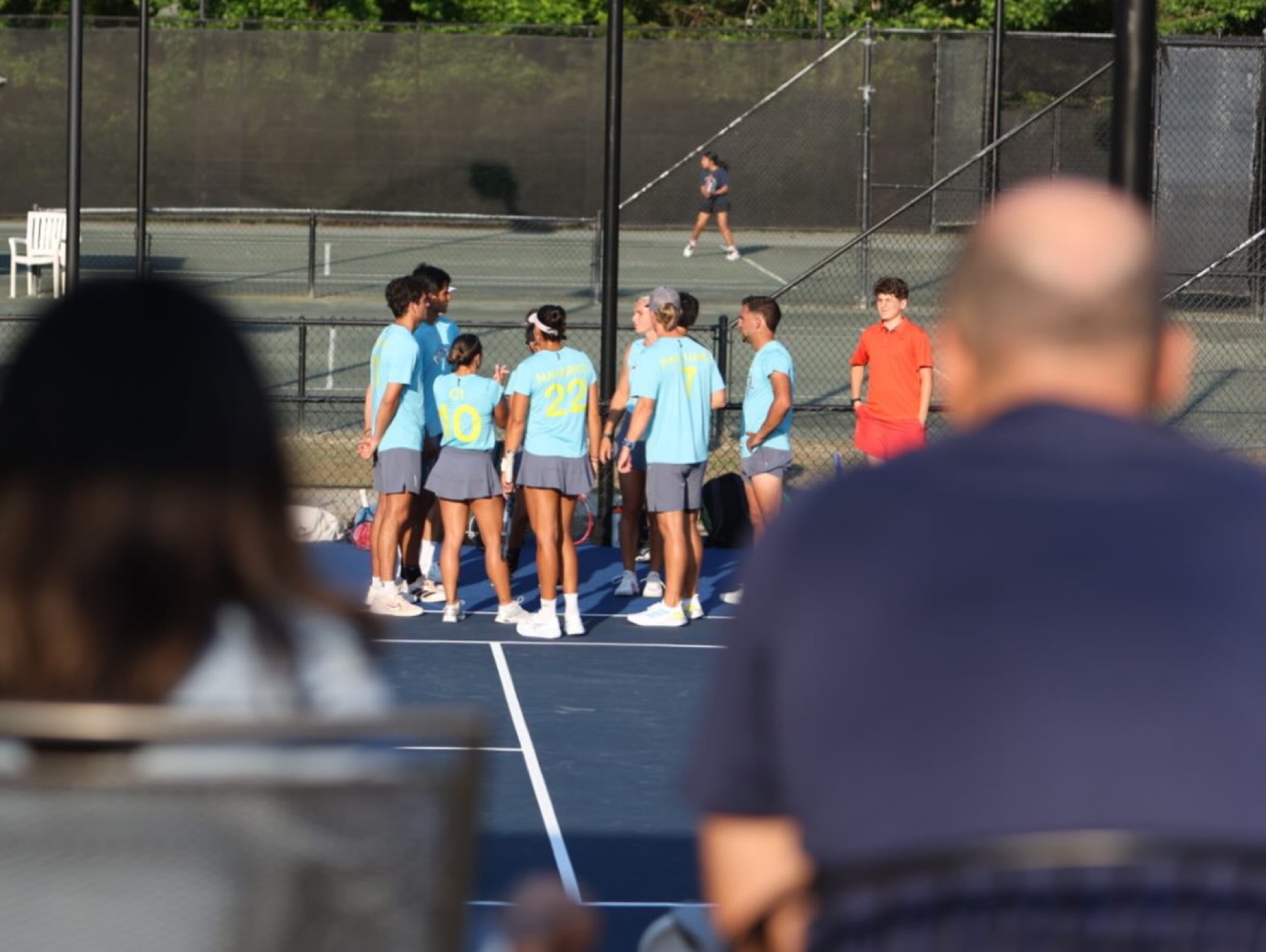
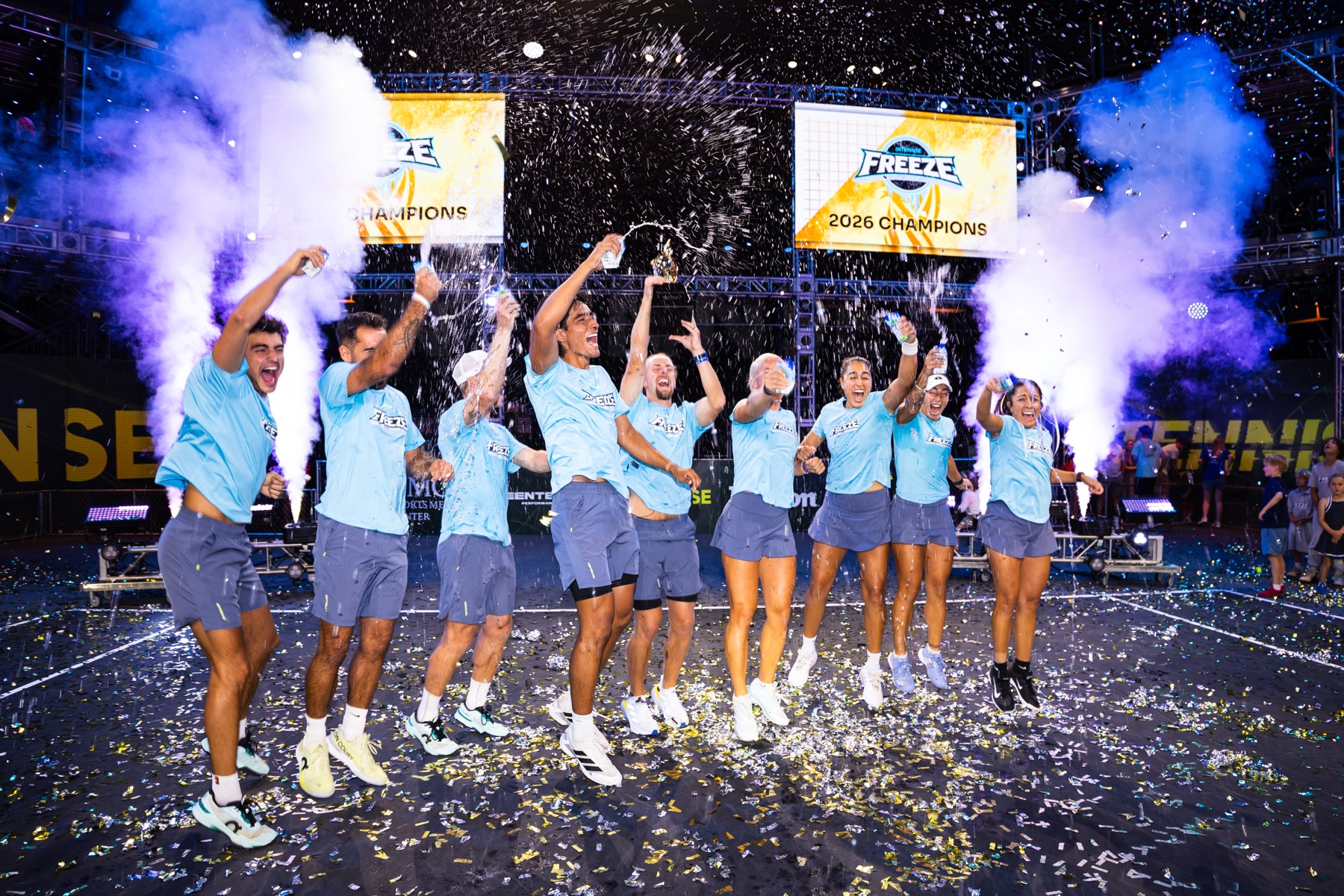
Season 2 closed on 1 August with Freeze beating Outriders 137–130. Ten professional teams, eight weeks, fifty-one Arcs, nine sellouts across twenty-eight events.
Each of those city identities is also a roster — and half of every roster on court is women. The teams are the mechanism. Build more of them and the number of paid professional places for women goes up in lockstep, without anyone having to argue for it in a budget meeting.
The Rules of INTENNSE, explained · 2:04
■ Someone inside the game said so first
A USTA section director coached a roster here, then wrote about it.
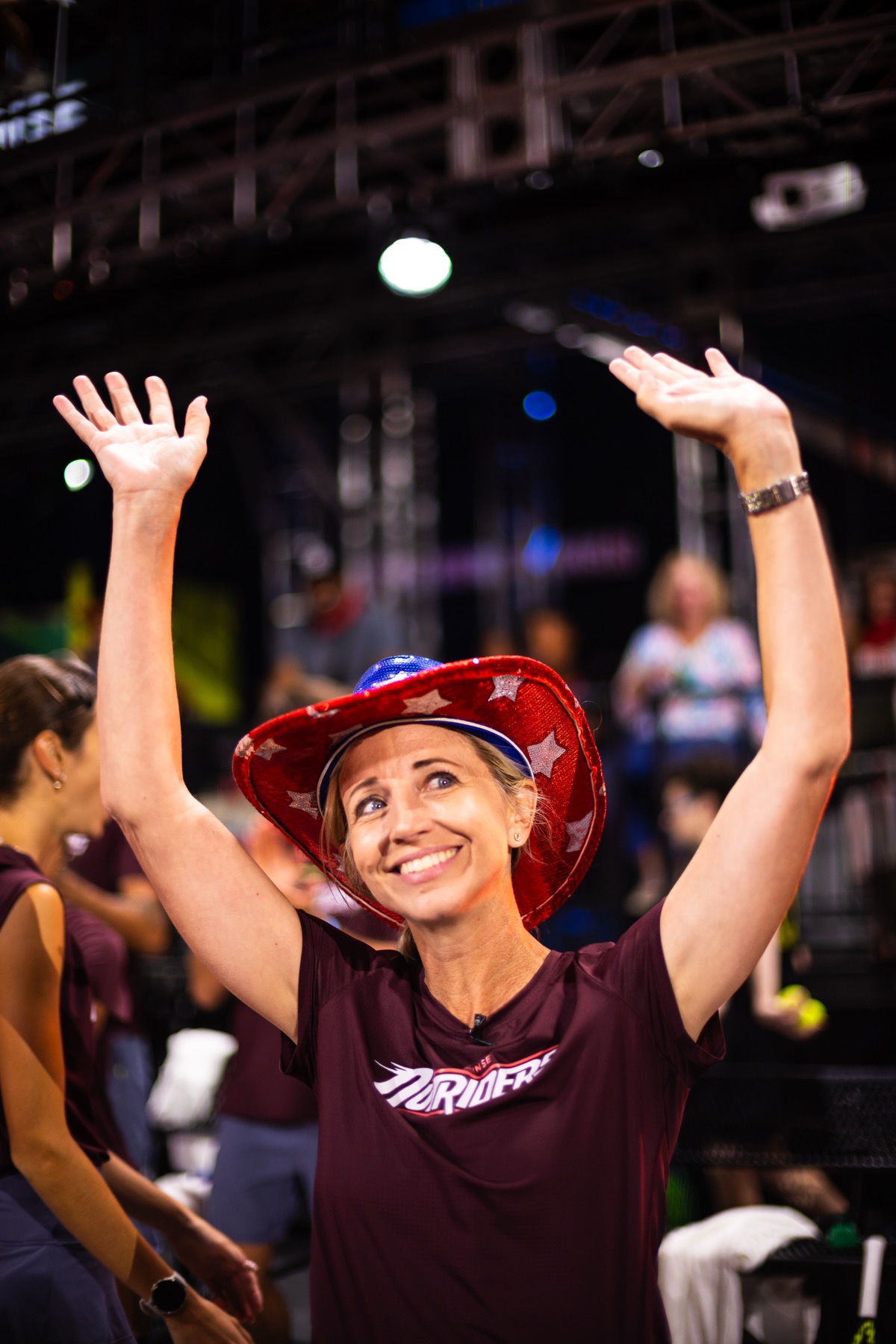
Amy Bartlett O’Connell, Executive Director of USTA Atlanta, coached eight INTENNSE athletes through the 2026 season with the Outriders. On Championship Weekend she wrote about it on her own feed.
“Innovative, fast-paced, co-ed team format challenged our players in new ways while creating an electric atmosphere that brought a fresh energy to the game.”
Amy Bartlett O’Connell · Executive Director, USTA Atlanta · 31 July 2026
We didn’t commission it and we didn’t pay for it. She closed with: “I truly believe we’re only seeing the beginning of INTENNSE.”
■ On the objection
Built the other way round.
Across top-tier sport the same pattern repeats. Revenue concentrates at the apex — premium hospitality, media rights, a handful of marquee events — while the developmental base that feeds it gets comparatively little. Spectacle is easier to finance than grassroots, and the gap compounds quietly for years before anyone names it.
Tennis carries a sharp version of it, and the incumbents have been candid about the limit. A major can raise prize money and has said it will. What it has ruled out is restructuring — players get paid more, but they get no stake. Every increase is a payment, not a share.
INTENNSE is built the other way round. It isn’t drawing off an existing base to inflate an event — it’s adding a tier that didn’t exist, where players are participants in the enterprise rather than recipients of a purse.
373 registered for this year’s draft, up 748%. That is a base thickening rather than thinning — and it is the measure we’d want to be judged on, ahead of attendance or impressions.

■ Why we sent this
There’s no ask attached to this.
We’re not asking the WTA to sanction a league, fund one, endorse one, or make room in a calendar. You have a commercial mandate to triple revenue by 2029 and a tour to hold together while you do it, and none of that gets easier because a new competition exists in Atlanta.
We’d rather you simply knew it existed — and knew that 144 women applied to play in it this year — than arrive with a proposal before you’ve set your own direction.
If any of it is worth an hour, we’ll make the time whenever it suits you. If it isn’t, we’ll keep building, and this will have cost you nothing but the scroll.
■ Where an hour could lead
Not proposals. Just the shapes this could take, if the idea appeals at all:
Counting what happens to them
Track what becomes of the women who play a season here — rankings, entries, earnings, years retained in the sport. If the layer works, it should be visible in your numbers, not ours.
An open draw with a door on it
The Challenge Series already turns unranked players into paid professionals. What it lacks is any formal relationship to what comes next.
The players nobody is holding
Late-blooming twenty-four to twenty-eight year olds the individual tour will never absorb, but who are entirely capable of professional tennis in a team context.